AI Campaign Builder for Gyms: A 30-Day Local Growth Playbook
A 30-day gym marketing playbook showing how fitness businesses can use an AI campaign builder for trial offers, local ads, landing pages, and member follow-up.

Buildo Team
AI Marketing Strategy
Insight
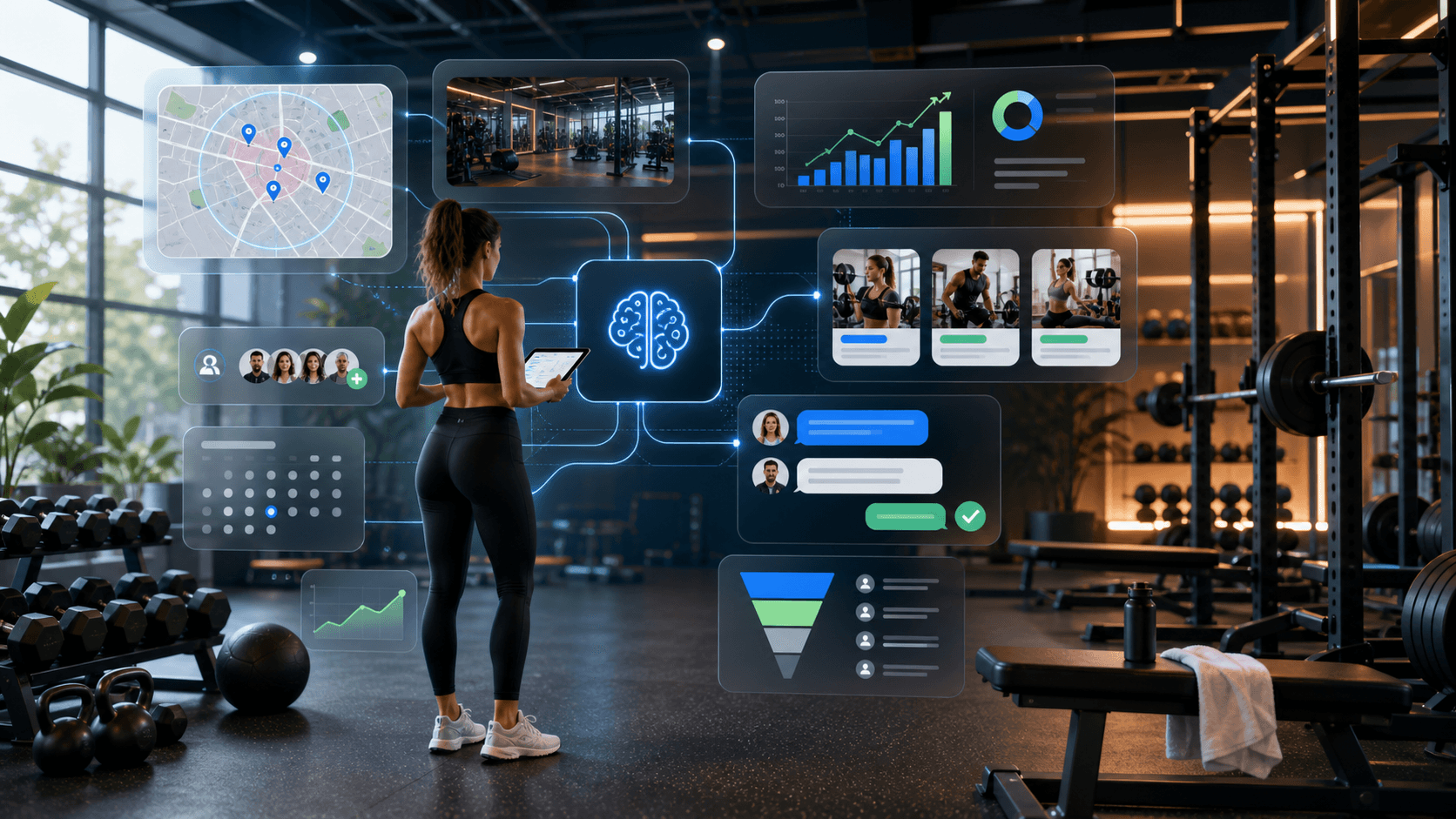
Short answer: an AI campaign builder for gyms is useful when it turns one membership or trial offer into a 30-day local growth system: campaign plan, ad angles, landing page copy, class or trial follow-up, and a weekly ROI check. The goal is not to create more fitness posts. The goal is to help the gym launch one measurable offer, learn from it, and repeat the winning pattern.
Fitness businesses often have strong trainers, loyal members, and good classes, but their marketing gets stuck in random posting. Buildo's workflow starts with https://site.buildoai.com/tools/marketing-plan-generator, creates offer-specific ad variations in https://site.buildoai.com/tools/facebook-ad-generator, turns the click into a focused page with https://site.buildoai.com/tools/landing-page-copy-generator, and follows up with prospects through https://site.buildoai.com/tools/whatsapp-campaign-generator. That connected loop matters more than another generic motivational caption.
Why Gyms Need a Campaign Builder Instead of More Content
A gym does not need unlimited content ideas as much as it needs one clear growth motion. A trial, challenge, open week, class pack, or personal training consultation should have a specific audience, local promise, deadline, landing page, and follow-up sequence. Without that structure, the business may get impressions while the sales team still has to figure out what to say next.
Search and answer engines reward helpful, specific content, which is why Google's SEO Starter Guide at https://developers.google.com/search/docs/fundamentals/seo-starter-guide, AI content guidance at https://developers.google.com/search/docs/fundamentals/using-gen-ai-content, and structured data overview at https://developers.google.com/search/docs/appearance/structured-data/intro-structured-data are useful references. Local gyms also depend on location relevance and profile quality, so https://support.google.com/business/answer/7091 and https://support.google.com/business/answer/3474122 matter when the campaign connects paid traffic, organic search, and map visibility.
The 30-Day Gym Growth Playbook
A simple 30-day plan is enough for most local gyms. Week one defines the offer and builds the assets. Week two launches the first ad and landing page. Week three tightens follow-up and tests a second angle. Week four reviews economics and decides whether to scale, refresh, or stop. AI speeds up the assembly work, but the business still decides the offer, schedule, staffing, and member experience.
Offer and campaign plan: https://site.buildoai.com/tools/marketing-plan-generator
Local ad copy and hooks: https://site.buildoai.com/tools/facebook-ad-generator
Trial or challenge page: https://site.buildoai.com/tools/landing-page-copy-generator
WhatsApp or SMS-style follow-up drafts: https://site.buildoai.com/tools/whatsapp-campaign-generator
Budget and break-even check: https://site.buildoai.com/tools/campaign-roi-calculator
Gym-specific use case: https://site.buildoai.com/use-cases/ai-marketing-agent-for-gyms
AEO: Direct Answers Gym Owners Ask
Can AI build a gym marketing campaign?
Yes. AI can draft the campaign plan, ad angles, landing page sections, FAQs, and lead follow-up. The gym should still approve the offer, class availability, trainer capacity, claims, and final publishing.
What is the best first offer for a gym campaign?
The best first offer is usually a low-friction trial, beginner challenge, consultation, or class pack. It should be easy to understand and tied to a clear next action.
How long should a gym test one campaign?
A 30-day cycle is practical. It gives enough time to launch, collect leads, improve follow-up, and judge whether the offer deserves more budget.
Should gyms use WhatsApp for follow-up?
They should use it where prospects respond quickly in conversational channels. WhatsApp Business information is available at https://business.whatsapp.com/products/business-platform, while email benchmarks at https://mailchimp.com/resources/email-marketing-benchmarks/ are useful for longer nurture campaigns.
GEO: Local Gym Campaign Examples
Phoenix strength gym
A Phoenix strength gym can run a six-week beginner strength challenge for professionals who want structured coaching after work. The campaign should mention class times, neighborhood convenience, coaching support, and the exact trial next step.
Austin yoga studio
An Austin yoga studio may use a new-student intro pack with local wellness language, schedule-friendly hooks, and a page that explains class levels. AI can help create beginner, stress relief, and community angles without changing the core offer.
Chicago boxing gym
A Chicago boxing gym might promote a 14-day conditioning trial before summer or January demand peaks. The ad should speak to energy, accountability, and schedule, while the follow-up should ask which class time the prospect wants to try first.
Step-By-Step 30-Day Implementation
Day 1: Pick one commercial goal: trials, personal training consults, class pack sales, or reactivation.
Day 2: Build the brief in https://site.buildoai.com/tools/marketing-plan-generator. Include city, neighborhood, audience, offer, schedule, capacity, and desired action.
Days 3-4: Generate ad variants in https://site.buildoai.com/tools/facebook-ad-generator. Create hooks for beginners, busy professionals, former members, and people who need accountability.
Days 5-6: Create the landing page copy in https://site.buildoai.com/tools/landing-page-copy-generator. Match the ad promise, show who it is for, and answer class or trial questions.
Day 7: Draft follow-up in https://site.buildoai.com/tools/whatsapp-campaign-generator. The first message should ask one easy scheduling question, not send a long pitch.
Week 2: Launch with a modest test budget and track leads, booked trials, attended trials, and sales conversations.
Week 3: Refresh the weakest ad angle, improve the first-screen page copy, and shorten the response time for new leads.
Week 4: Use https://site.buildoai.com/tools/campaign-roi-calculator to judge economics. Scale only if cost per attended trial and conversion rate make sense.
Internal Linking Plan for the Gym Campaign Cluster
A gym growth article should connect directly to practical tools and comparison pages so the reader can build the campaign instead of only learning about it.
Homepage: https://site.buildoai.com/
Gym use case: https://site.buildoai.com/use-cases/ai-marketing-agent-for-gyms
Campaign builder for small business: https://site.buildoai.com/use-cases/campaign-builder-for-small-business
Marketing plan generator: https://site.buildoai.com/tools/marketing-plan-generator
Facebook ad generator: https://site.buildoai.com/tools/facebook-ad-generator
Landing page copy generator: https://site.buildoai.com/tools/landing-page-copy-generator
WhatsApp campaign generator: https://site.buildoai.com/tools/whatsapp-campaign-generator
Campaign ROI calculator: https://site.buildoai.com/tools/campaign-roi-calculator
Buildo vs ChatGPT: https://site.buildoai.com/compare/buildo-vs-chatgpt
Buildo vs Canva: https://site.buildoai.com/compare/buildo-vs-canva
Common Mistakes Gyms Make With AI Campaigns
Asking AI for generic fitness motivation instead of one campaign around one offer.
Changing the offer every few days before the gym has learned anything useful.
Sending ad clicks to a homepage that does not repeat the trial or challenge promise.
Not following up quickly when someone asks about schedule, price, or beginner level.
Tracking likes and comments instead of booked trials, attended trials, and memberships sold.
Launching an offer without checking trainer capacity, class availability, or onboarding quality.
The strongest gym campaigns are operationally boring in the best way. They pick one offer, repeat the promise everywhere, answer beginner objections, respond quickly, and review results every week. AI helps because it removes the blank-page delay and keeps the assets aligned, not because it magically creates demand without a good offer.
How to Position a Gym Offer So AI Output Converts
A gym should not ask AI to promote fitness in general. The input should describe one offer, one audience, one local reason to act now, and one next step. For example, a beginner strength trial for people within three miles of the studio needs different language from a high-intensity conditioning challenge for former athletes. The more specific the offer, the more useful the AI output becomes. A strong prompt includes the neighborhood, class schedule, trainer style, capacity limit, price context, and what happens after the lead responds.
This also helps the gym avoid overpromising. AI may produce dramatic transformation language if the prompt is loose, but local fitness marketing works better when the promise is believable and operationally true. A safer claim is that the program helps beginners build a consistent routine with coaching and scheduled classes. The gym can still be persuasive without implying guaranteed body changes, medical outcomes, or unrealistic timelines. The manager should approve any performance, health, or transformation statement before the campaign goes live.
Measurement: How to Decide Whether the 30-Day Campaign Worked
A gym campaign should be reviewed through the full funnel. The first layer is traffic and lead cost. The second layer is booked trials or consultations. The third layer is attended trials. The fourth layer is membership or package conversion. If the gym only measures leads, it may scale an offer that attracts curious people who never show up. If it only measures memberships, it may miss a follow-up problem that is reducing attendance before the sales conversation even happens.
The weekly review should compare ad angle, page promise, first response, and attendance. If beginner ads produce cheap leads but poor attendance, the follow-up may need to reduce anxiety and explain what to bring. If personal training ads produce fewer leads but higher conversion, https://site.buildoai.com/tools/campaign-roi-calculator can show whether the campaign is still more profitable. AI can summarize the pattern and draft next week's improved version, but the owner should decide based on capacity, trainer availability, and actual sales quality.
The practical goal is a reusable gym growth loop. Each month should leave behind a better offer brief, a clearer landing page, stronger objection handling, and a more accurate sense of which local audience is worth pursuing. That is where an AI campaign builder becomes more than a content shortcut. It becomes a memory system for the gym's marketing operations, as long as the team reviews the results and feeds real learning back into the next campaign.
Onboarding is part of the campaign, not a separate operational detail. If a trial lead books a class and then receives no clear preparation message, attendance drops. If the person arrives and the coach does not know which offer they claimed, trust drops. AI can help create the pre-class message, the front desk notes, the post-trial follow-up, and the reactivation message for people who did not attend. That does not replace the human welcome. It makes the welcome more consistent, which is often what turns a lead into a member.
The gym should also document objections every week. Common objections include schedule, intimidation, price, injury history, commute, and uncertainty about whether beginners are welcome. Those objections should feed the next landing page FAQ and the next ad angle. This is how the 30-day campaign becomes a learning system instead of a one-time promotion.
FAQ
How many ad angles should a gym test?
Three to five is enough for one offer. Test beginner confidence, convenience, accountability, transformation, and community rather than rewriting the whole campaign.
Can AI write gym landing page copy?
Yes. It can draft headlines, offer sections, FAQs, trainer proof, and CTA copy. The gym should verify schedules, prices, promises, and any transformation claims.
What should a gym measure first?
Track booked trials, attended trials, cost per attended trial, membership conversion rate, and response time. Those metrics are closer to revenue than impressions.
Should a gym run Facebook ads or local SEO first?
Both can share the same brief. Ads create faster demand tests, while local SEO and helpful pages build compounding visibility. The offer and page quality matter in both channels.
Can AI help reactivate old gym leads?
Yes. AI can draft reactivation messages around a new class, challenge, or trial, but the gym should segment past leads and avoid sending irrelevant blasts.
When should a gym use an agency instead of AI?
An agency can help with larger creative production, complex media buying, and multi-location strategy. AI is often the better first layer for weekly campaign execution.
Final CTA
If your gym needs an AI campaign builder that connects offer planning, ad copy, landing pages, and lead follow-up, start with https://site.buildoai.com/tools/marketing-plan-generator, create local ad angles at https://site.buildoai.com/tools/facebook-ad-generator, and build the follow-up flow with https://site.buildoai.com/tools/whatsapp-campaign-generator.
Sources / Citations
Google SEO Starter Guide: https://developers.google.com/search/docs/fundamentals/seo-starter-guide
Google guidance on AI-generated content: https://developers.google.com/search/docs/fundamentals/using-gen-ai-content
Google structured data overview: https://developers.google.com/search/docs/appearance/structured-data/intro-structured-data
Google Business Profile local ranking help: https://support.google.com/business/answer/7091
Google Business Profile completeness guidance: https://support.google.com/business/answer/3474122
WhatsApp Business Platform overview: https://business.whatsapp.com/products/business-platform
Mailchimp email marketing benchmarks: https://mailchimp.com/resources/email-marketing-benchmarks/